
10 days · Tokyo · Nagano · Gifu · Aichi · Yamanashi
Cinematic Anime Landscapes
A seichi junrei for two adults who want neon Tokyo and alpine stillness in the same trip. The days follow frames from Makoto Shinkai, Studio Ghibli and Yuru Camp: Suga Shrine stairs, Shinjuku rain shelters, Lake Suwa, Hida-Furukawa, Ghibli Park and Lake Motosu. Carry a camera and expect residual snow in the mountains even when Tokyo feels like early spring.
Early March is a season of contrasts: Tokyo around 12–14°C with plum blossom, nights below freezing in Nagano and Gifu, and snow still on the peaks.
Day 1
Shinjuku and Yotsuya: The Shinkai Pilgrimage
10:30
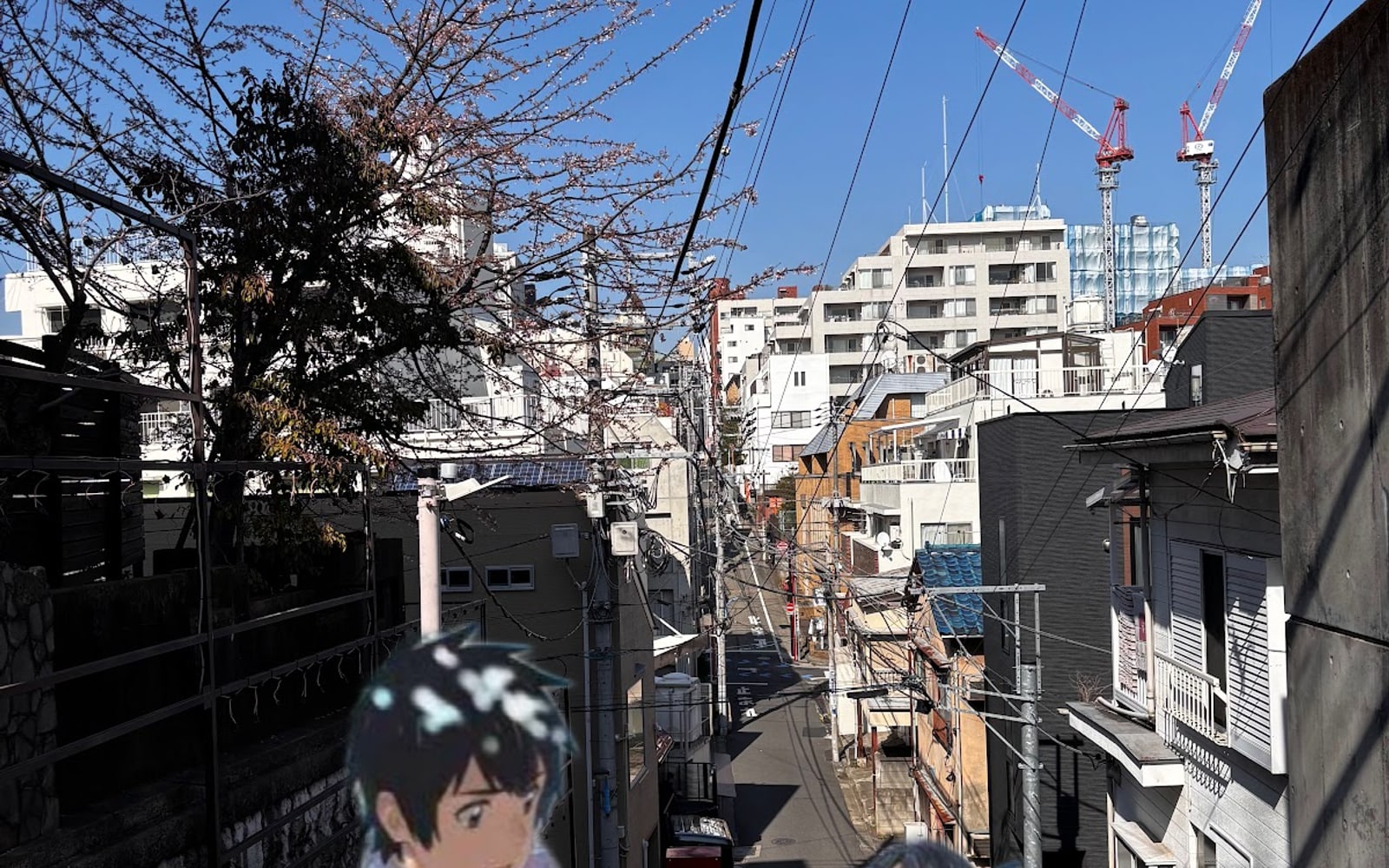
Suga Shrine stairs
Hours: Always open
The red-railed staircase where Taki and Mitsuha meet at the end of Your Name. The shrine itself dates to 1634 and still sits in a quiet residential pocket that feels paused on that last frame.
Look for Your Name ema at the shrine office.
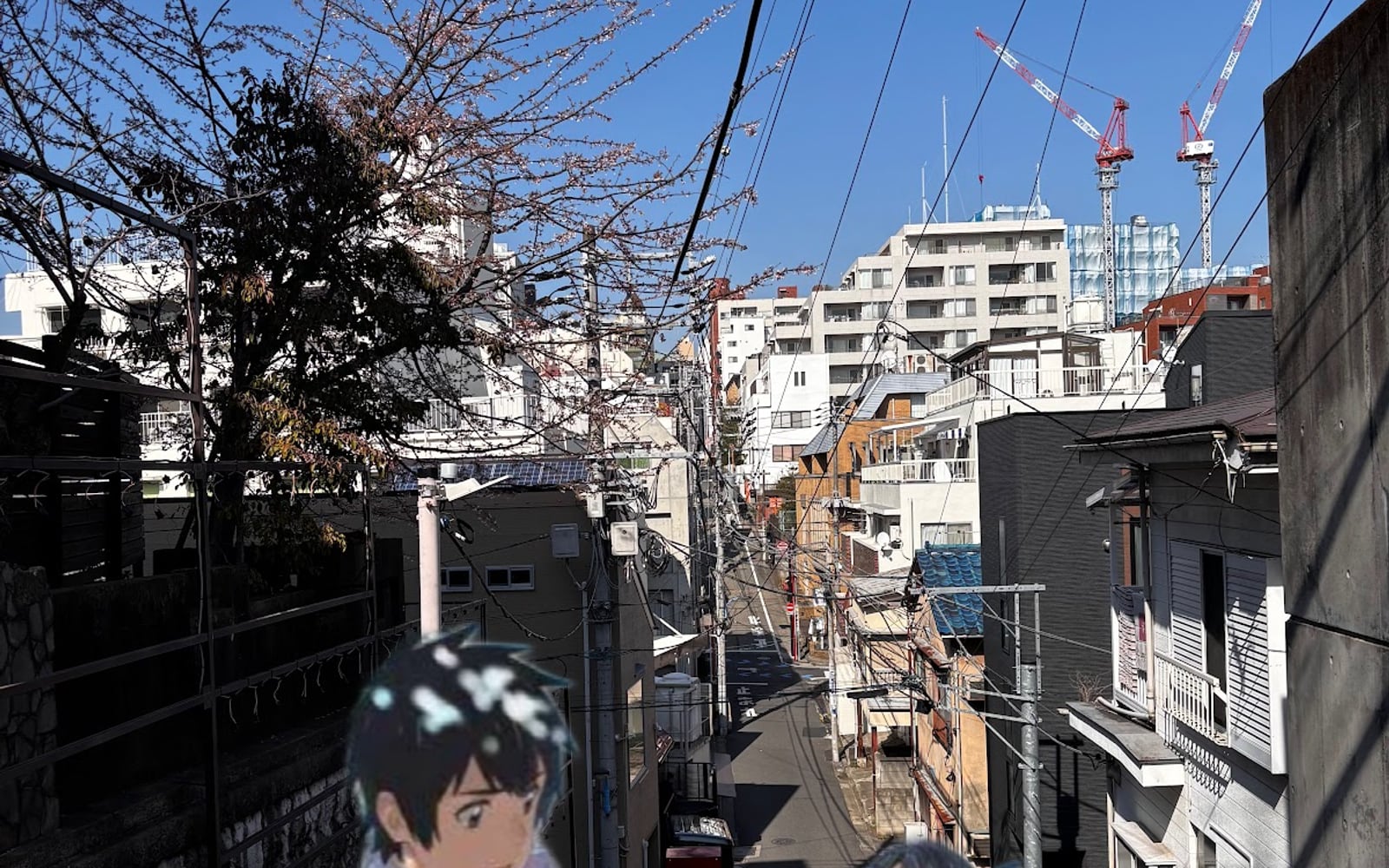
Photo: xuan aaron 12:00
Shinjuku Gyoen National Garden
Hours: 09:00–16:00
The wide lawns and Japanese garden that became The Garden of Words. The pavilion is the rain shelter from the film; a specific bench in the Japanese garden matches the poster angle.
Admission about 500 JPY. The walk from Suga Shrine is 15–20 minutes through backstreets worth photographing.
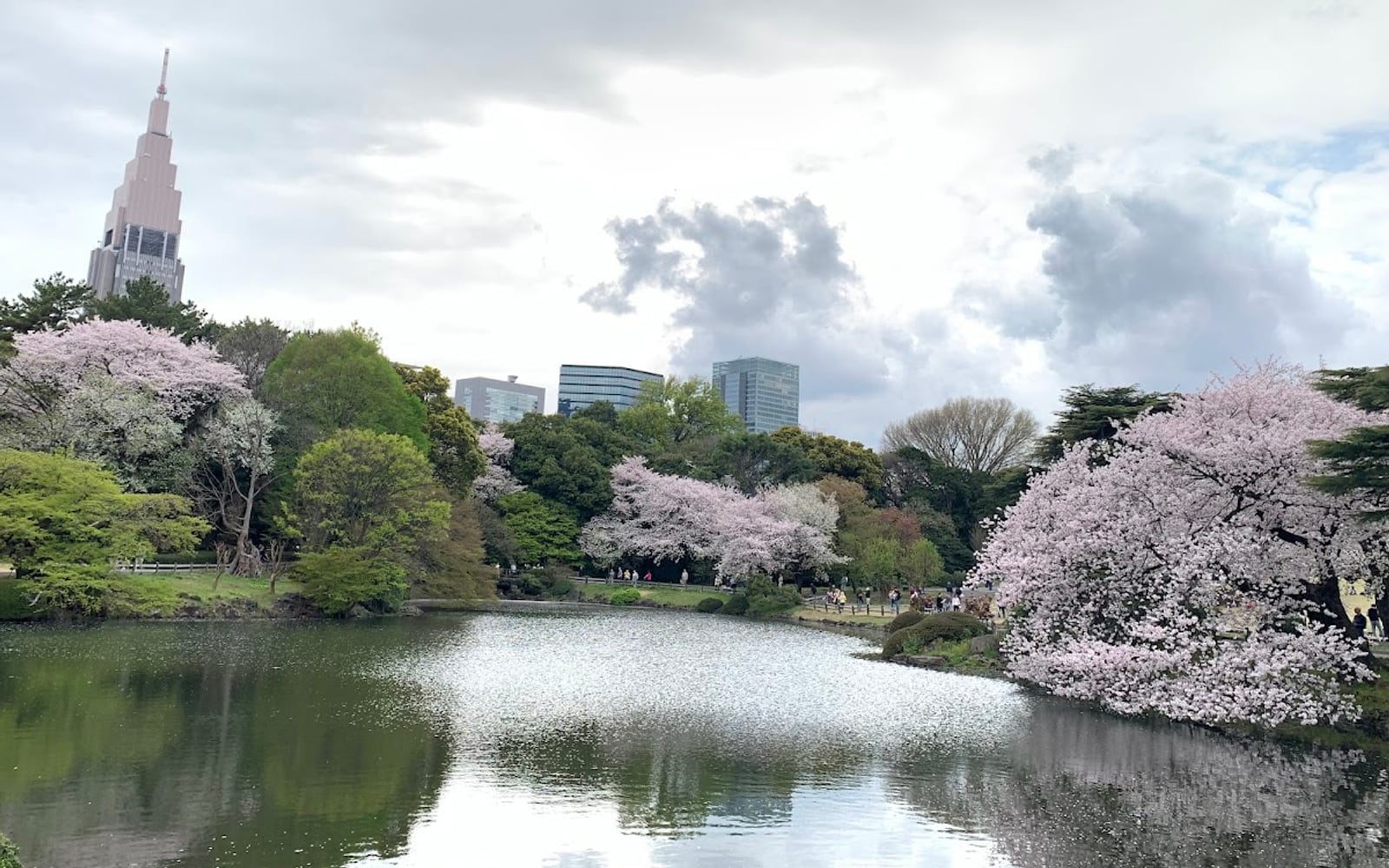
Photo: Vivian Li 16:30
Shinjuku Station overpass
Hours: Always open
The pedestrian bridge near Southern Terrace, used for time-lapse city cuts in Shinkai's films. Yunika Vision screens nearby give the same neon wash as Weathering With You.
Eat
Cafe La Boheme Shinjuku-Gyoen — high-ceilinged restaurant that inspired Taki's workplace · Omoide Yokocho (Nishishinjuku) — yakitori alleys for a grittier Tokyo night
Getting around
Drop luggage at the hotel first. A Suica or Pasmo card covers the subway for the whole Tokyo stretch.
Look for
Sekido Shinjuku for affordable camera gear and film
Budget note
About 10,000 JPY: garden ticket 1,000, dining 8,000, local transit 1,000.
Day 2
Shibuya and Roppongi: Concrete Jungle Views
09:30
Yoyogi Kaikan area
Hours: Always open
The streets around the former Sky Shrine site from Weathering With You. The building is gone; the fire escapes, vending machines and urban canyons still match Hodaka's hideout.
11:00
Shibuya Crossing and Hachiko
Hours: Always open
The world's busiest scramble and the statue that orients every visitor. The second-floor Starbucks in Tsutaya is the classic elevated time-lapse perch.
13:30
Shibuya Sky
Hours: 10:00–22:30
An outdoor deck at 229 meters. Sky Edge is unobstructed. On a clear March morning Fuji can sit between the towers.
Sunset slots sell out about four weeks ahead at midnight Japan time. Book that window, not a walk-up.
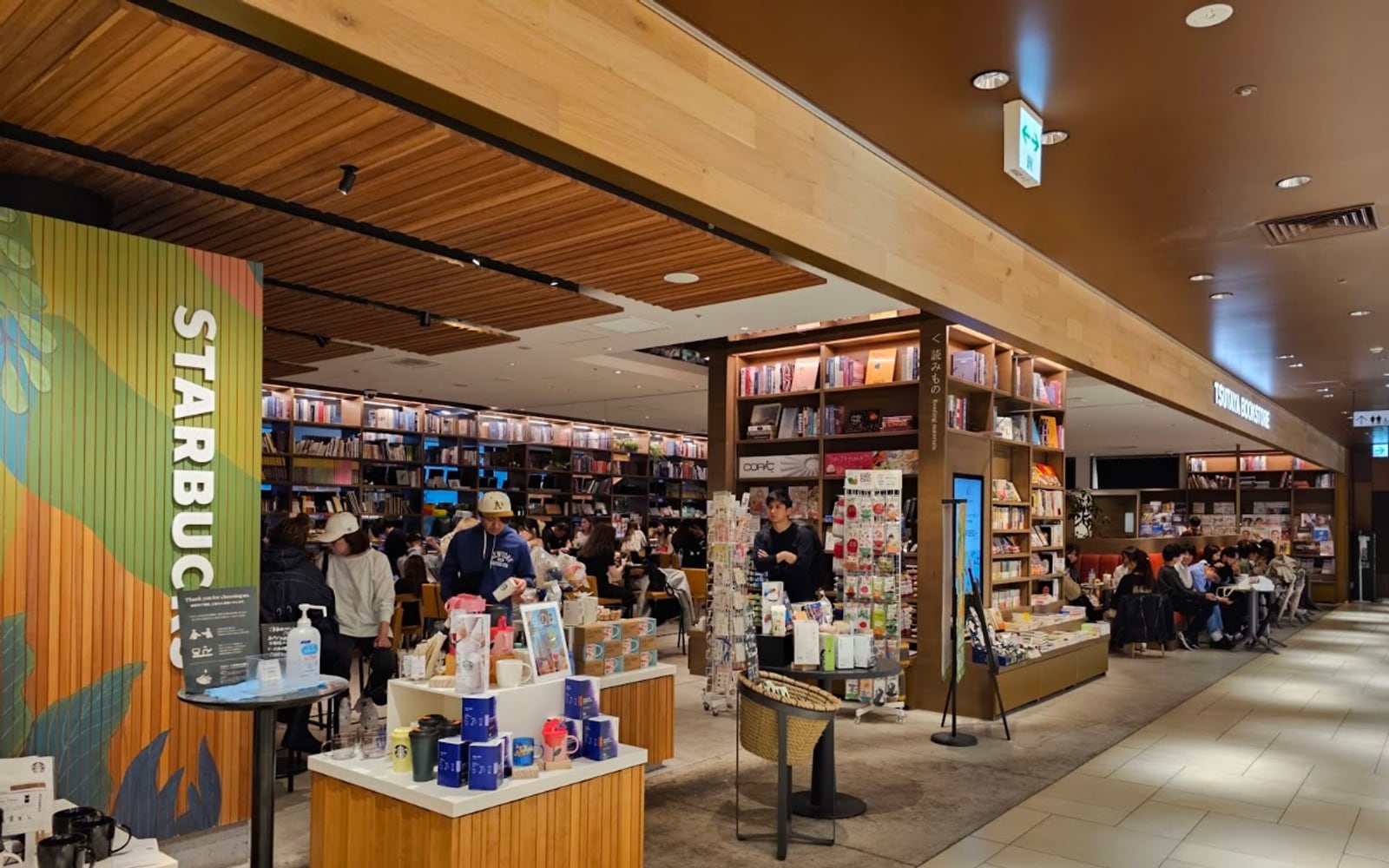
Photo: carl hong 16:00
Roppongi Hills Mori Tower
Hours: 10:00–22:00
The sky deck where Taki and Okudera watch sunset, with Tokyo Tower in the frame. The circular helipad is the date-scene platform.
Eat
Ichiran Shibuya (Jinnan) — tonkotsu in individual booths · Gonpachi Nishiazabu — cinematic rooms a short walk from Roppongi Hills
Getting around
Do not leave Shibuya Sky to chance. Mori Art Museum shop is the better souvenir stop of the two towers.
Look for
Mori Art Museum shop for Tokyo design goods
Budget note
About 15,800 JPY: decks 6,800, dining 8,000, transit 1,000.
Day 3
Lake Suwa: The Real Itomori
09:00
Tokyo to Kami-Suwa
JR Azusa limited express, about 2.5 hours, as cedar replaces concrete. Sit by a window once you leave the Kanto plain.
13:30
Tateishi Park
Hours: Always open
The crater-lake viewpoint that became Itomori. The climb is 30–40 minutes and steep. At katawaredoki, twilight, lakeside lights come on in the same rhythm as the film.
Walk up in good weather; if the path is icy, a one-way taxi is about 1,500 JPY and worth it.
16:30
Kami-Suwa lakeside
Hours: Always open
A flat stroll along the shore, with onsen steam and, on clear evenings, the castle seeming to float. Free ashiyu footbaths sit along the water.
Eat
Tenhou Kami-Suwa — gishuu ramen near the station · Kura (Kogandori) — buckwheat soba in a renovated warehouse
Getting around
The lake is the day's whole point. Do not cut the park short for shopping.
Look for
Suwa Glass Village on the shore for crystal in lake colors
Budget note
About 22,120 JPY: dining 7,000, Azusa and local transport around 15,120.
Day 4
Suwa and Yatsugatake: Alpine Air
09:30
Suwa Taisha Shimosha Akimiya
Hours: Always open
One of Japan's oldest shrine complexes, with massive shimenawa. Four onbashira pillars at the corners are replaced every six years in a festival that still uses live trees.
13:00
Yatsugatake Natural and Culture Park
Hours: 09:00–17:00
High fields and a planetarium with a Yuru Camp openness. Dining is thin in late winter; buy a mountain ekiben at Chino Station before the bus.
Much colder than the lakeside. Wear the heaviest layers of the trip. Chino Station buses are infrequent — read the bay times twice.
Eat
Family soba stalls near Shimosha Akimiya · Mountain ekiben from Chino Station for the park
Getting around
This is a thermal-layer day, not a cafe-hopping day.
Look for
Suwa Taisha omamori with onbashira or deer motifs
Budget note
About 10,000 JPY: dining 7,000, local buses 3,000.
Day 5
Hida-Furukawa: Looking for Mitsuha
13:30
Hida-Furukawa Station
Hours: Always open
The platform and south overpass match Taki's arrival frame by frame. Stand on the bridge for the train pulling in.
The Nohi Bus from Matsumoto to Takayama is the scenic way in; sit on the right for mountain views. In town everything is a 10–15 minute walk.
14:45
Hida City Library
Hours: 09:00–18:00
The quiet public library where Taki reads about the comet. Ask the desk for the photography permit made for Your Name visitors.
16:00
Shirakabe Dozogai
Hours: Always open
White-walled storehouses and a canal of koi, though the fish may be resting in winter. Ajidokoro Furukawa nearby is the gohei-mochi shop from the film.
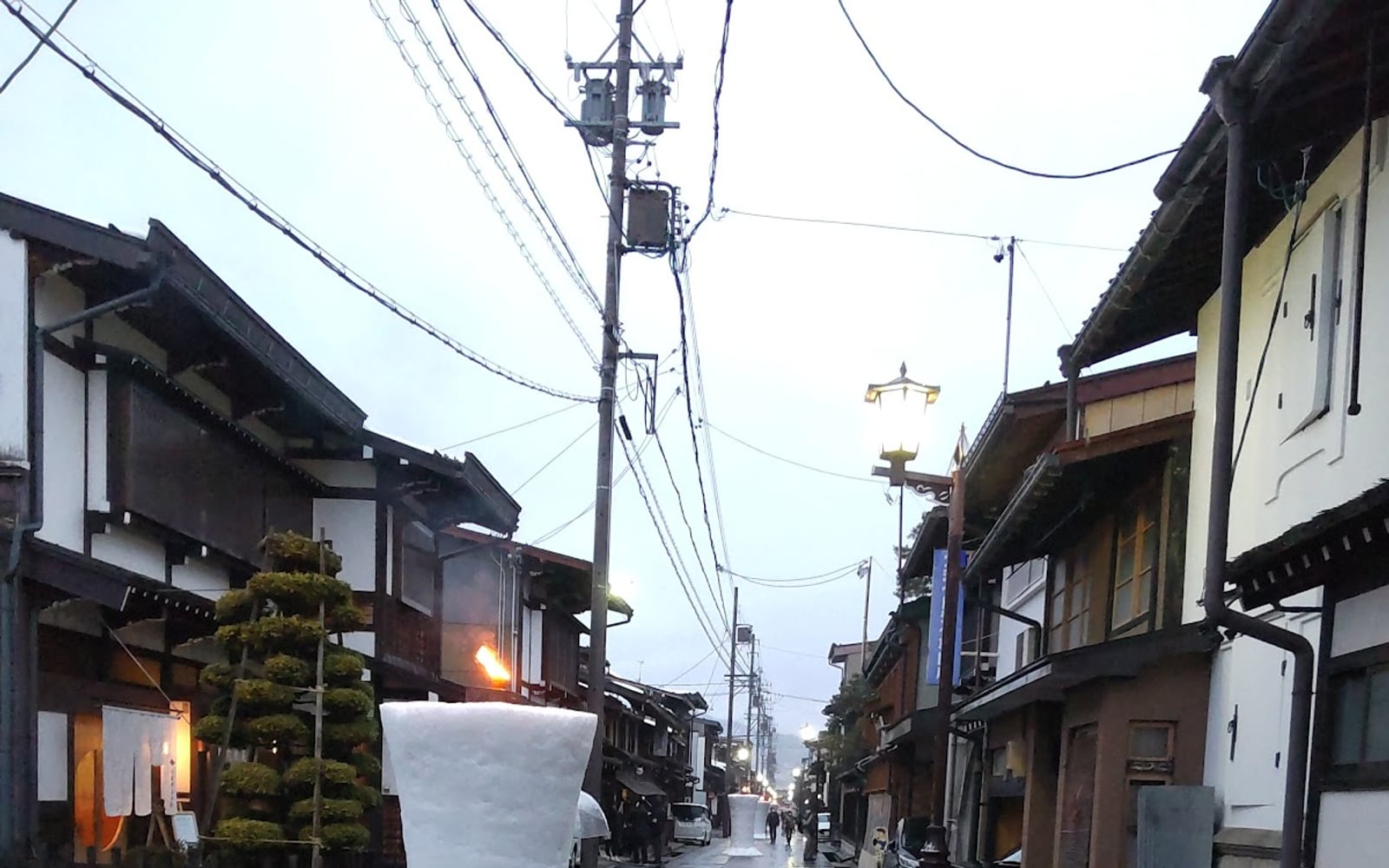
Photo: みのちゃん
Eat
Okada Ryokan restaurant (Ichinomachi) — Hida beef croquettes · Hida Kotte Ush if you pass back through Takayama — Hida beef on rice crackers
Getting around
Stay in Takayama or Furukawa; both work if you keep the bus times.
Look for
Hida-Furukawa Sakura Bussankan for crafts and kumihimo cords
Budget note
About 19,800 JPY: dining 8,000, highway bus and local transport 11,800.
Day 6
Takayama: Wooden Streets and Morning Market
09:00
Miyagawa Morning Market
Hours: 07:00–12:00
A riverside market since the Edo period. Stalls are built to be taken down every day. Try owara tamaten, a marshmallow-like sweet, or orchard apple juice.
10:45
Takayama Jinya
Hours: 08:45–17:00
The only surviving Edo-period regional government office of its kind. Tatami rooms once collected rice tax. Stones hold the roof instead of nails, a response to heavy mountain snow.
440 JPY.
13:15
Sanmachi Suji
Hours: Shops typically 09:00–17:00
The old merchant grid, with sake breweries marked by sugidama cedar balls. Many facades are more than 300 years old. Shops close around 17:00.
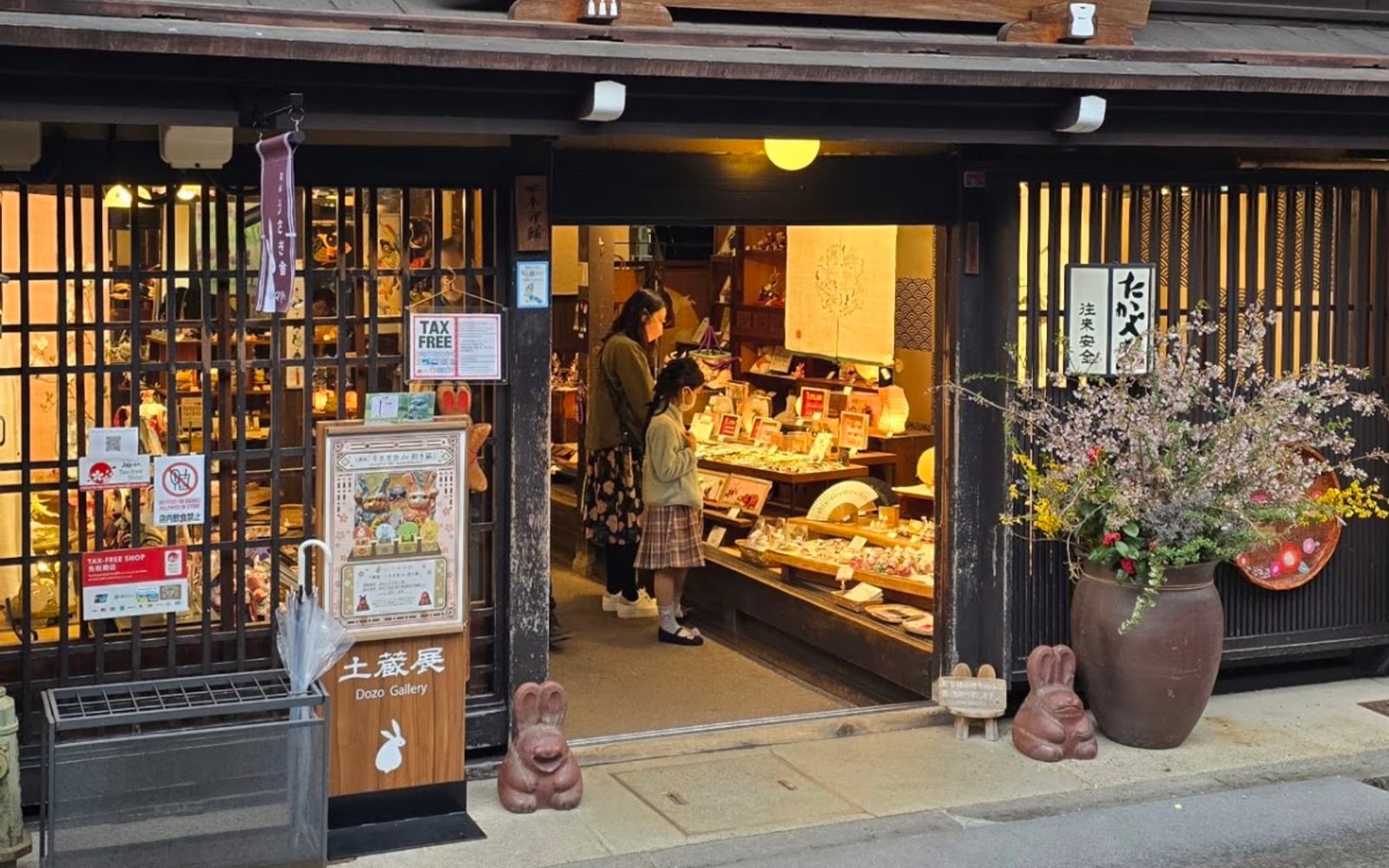
Photo: Kenny Cheng
Eat
Hida Kotteushi (Kamisannomachi) — Hida beef nigiri on a rice cracker · Center4 Hamburgers (Sannomachi) — retro Hida beef burgers
Getting around
Expect 5–8°C. The town is walkable; no taxi is needed between these three stops.
Look for
Hida sashiko embroidery kits · Small bottles from Funasaka or Harada breweries
Budget note
About 8,880 JPY: Jinya 880, dining 7,000, local walking 1,000.
Day 7
Nagoya: From Alpine History to Urban Neon
09:00
Wide View Hida to Nagoya
The limited express has oversized windows. Seats C and D on the right look into the Hida River gorge.
14:00
Osu Shopping District and Osu Kannon
Hours: Grounds always open; shops about 11:00–20:00
A 400-year-old temple in a maze of about 1,200 shops: retro games, street food and thrift. The temple library holds the oldest handwritten Kojiki copy.
16:30
Oasis 21
Hours: 10:00–21:00
The Spaceship Aqua glass roof, cooled by a sheet of recycled rainwater. The walkway sits 14 meters up and is at its best near sunset.
Eat
Yabaton Misokatsu (Osu) — Nagoya's miso pork cutlet · Sekai no Yamachan in Sakae — tebasaki fried wings
Getting around
Manaca or Suica on the subway. Osu to Sakae is a 20-minute walk if you want the street instead of one stop.
Look for
Komehyo in Osu for second-hand cameras · Uiro steamed rice cake as a Nagoya sweet
Budget note
About 20,200 JPY: dining 8,000, Hida express and city transit 12,200.
Day 8
Ghibli Park
09:30
Ghibli's Grand Warehouse
Hours: 09:00–17:00
An indoor town of exhibits and Cinema Orion shorts. Dust bunnies are hidden in corners. Tickets go on sale two months ahead, on the 10th, and are required.
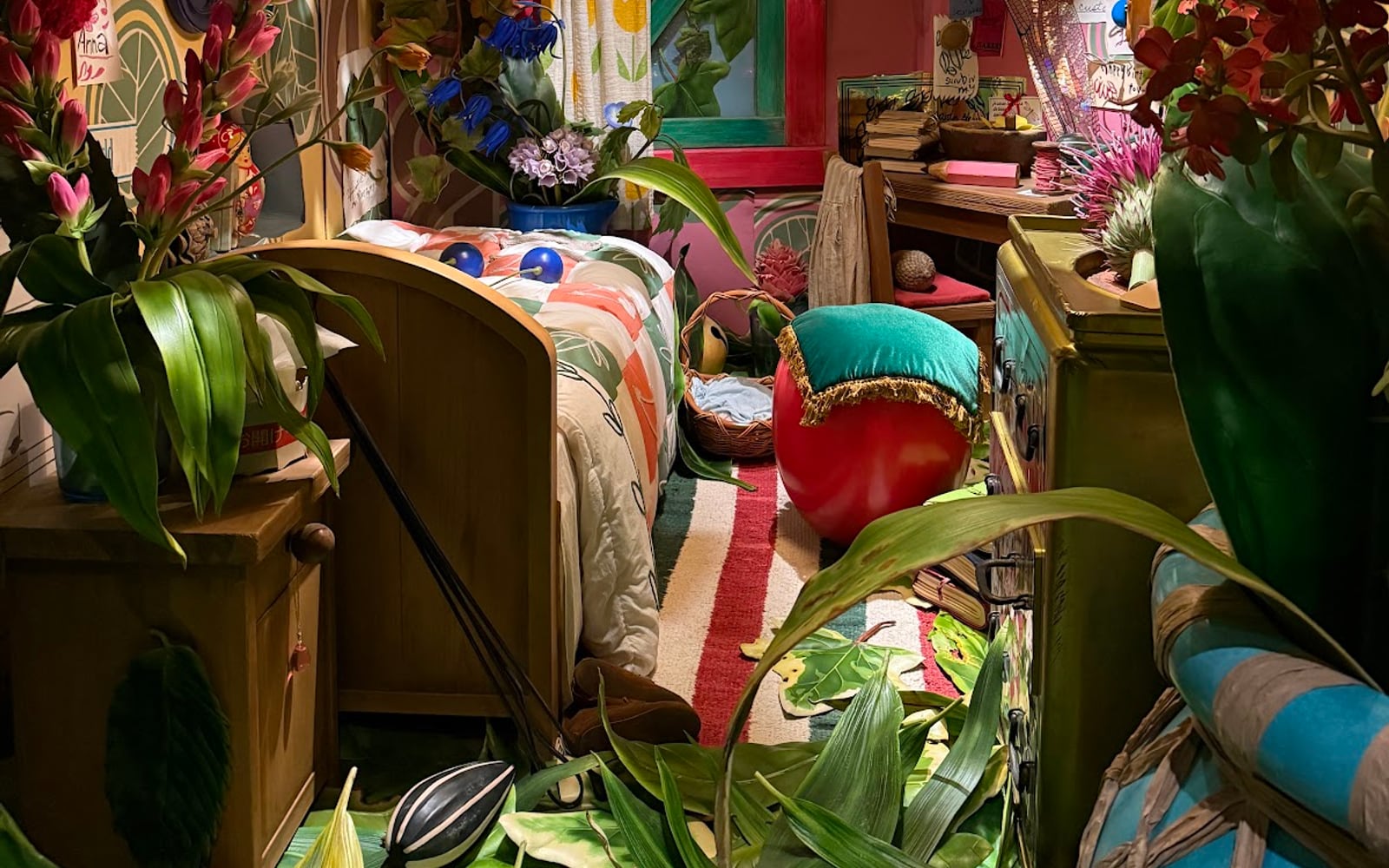
Photo: Wu Wu Wu 14:00
Hill of Youth and Dondoko Forest
Hours: 09:00–17:00
The World Emporium from Whisper of the Heart and Satsuki and Mei's house from Totoro. The elevator tower is a steampunk aside. These zones need their own tickets.
Take the Linimo maglev from Nagoya. Do not expect same-week tickets.
Eat
Transcontinental Flight Cafe inside the park — sandwiches and pizza with a pilot theme · Sugakiya in Aeon Mall Nagakute — cheap local ramen if you leave the park for lunch
Getting around
Build the whole day around the timed entry. The mall next door is the fallback if a zone is sold out.
Look for
Adventurous Flying Squadron shop for park-only goods · Rotunda Kazegaoka for North Village snacks
Budget note
About 17,600 JPY: park tickets 7,000, dining 8,000, Linimo 2,600.
Day 9
Lake Motosu: Yuru Camp Shore
14:00
Koan Campground
Hours: 08:00–20:00 for casual visitors
Where Nadeshiko slept on the bench. The shoreline view is the one printed on the 1,000-yen note. The campground shop sells Yuru Camp goods and the curry men cup noodles from the show.
Wind here is serious; a windproof shell is mandatory. Do not miss the last Blue Line bus back to Kawaguchiko.
Eat
Houtou Fudou in Kawaguchiko — flat noodles in miso broth · Koan cafeteria — curry men on site
Getting around
This is a long transit day from Nagoya into the Fuji lakes. Stay at Kawaguchiko or, if you booked ahead, a Koan cabin.
Look for
Koan shop for pilgrimage merch · Gateway Fujiyama at Kawaguchiko Station for Fuji cookies
Budget note
About 28,400 JPY: dining 7,000, highway bus and local buses 21,400.
Day 10
Chureito Pagoda and Tokyo Farewell
08:00
Arakurayama Sengen Park
Hours: Always open
Three hundred ninety-eight steps to the postcard of Chureito Pagoda and Fuji. Heart-shaped stones are set in the path. Early morning is the only reliable window for a clear mountain.
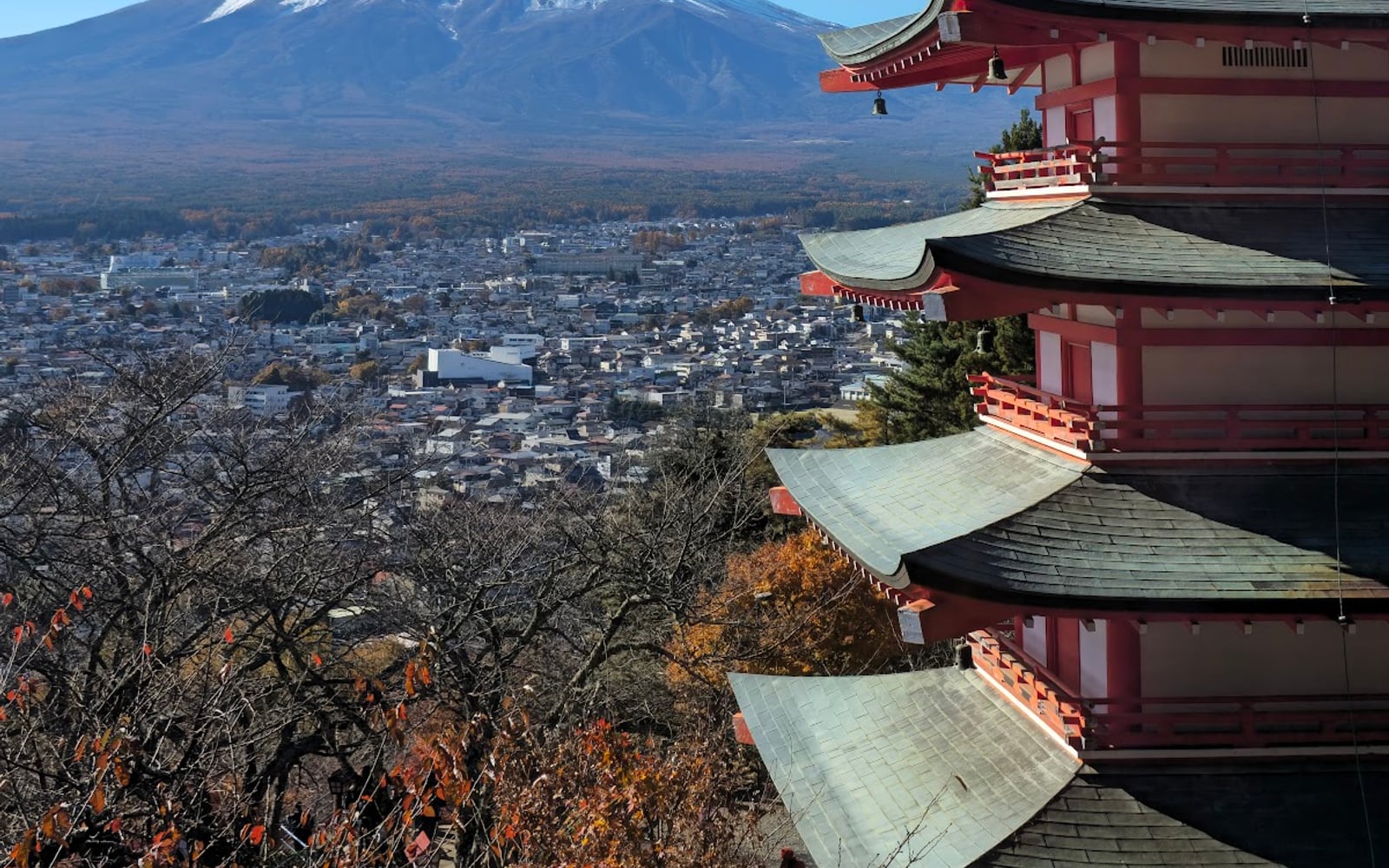
Photo: Alfredo Pino 14:30
Shinjuku free time
Last shopping and, if you still have legs, a return to the Weathering With You rooftop-shrine neighborhood. Use coin lockers at Shinjuku Station.
19:30
Narita Express
Leave three hours before a late-evening flight. The NEX from Shinjuku is the simplest luggage-friendly option.
Eat
Bakery & Cafe Esola — Fuji-shaped bread near the lakes · Omoide Yokocho again if you want a last alley supper in Shinjuku
Getting around
Do not stack a long lunch between the pagoda and the airport train. Fuji views vanish as soon as haze builds.
Look for
Alpen Tokyo in Shinjuku — ten floors of Japanese outdoor brands · Don Quijote Shinjuku for snack souvenirs
Budget note
About 14,540 JPY: dining 8,000, lake trains and NEX 6,540.
Where to stay
Tokyo
Sotetsu Fresa Inn Higashi Shinjuku
Direct subway access and a 15-minute walk to Shinjuku Gyoen. About 12,000–16,500 JPY.
Tokyo
Hotel Wing International Premium
Five minutes from the Suga Shrine stairs, in a quieter residential pocket. About 13,500–18,000 JPY.
Suwa
Hotel Route-Inn Kamisuwa
Breakfast and a natural onsen, useful after the Tateishi climb. About 10,500–13,500 JPY.
Suwa
Kamisuwa Station Hotel
Beside the station for early mountain departures. About 9,000–12,000 JPY.
Takayama
Country Hotel Takayama
Opposite the bus terminal, with a Family Mart on the ground floor. About 7,500–10,500 JPY.
Takayama
Wat Hotel & Spa Hida Takayama
Bookable private onsen and a wooden interior. About 11,250–14,250 JPY.
Nagoya
Meitetsu Inn Nagoya Nishiki
TV Tower views and a direct line toward Ghibli Park. About 7,500–10,500 JPY.
Nagoya
Vessel Inn Sakae Station
Strong local breakfast, near Oasis 21. About 9,750–12,750 JPY.
Lake Motosu
Koan Campground cabins
The Yuru Camp shoreline stay, from about 6,000–12,000 JPY. Book far ahead.
Kawaguchiko
Toyoko Inn Fuji Kawaguchiko
Free shuttle and Fuji views when the weather allows. About 10,500–13,500 JPY.